

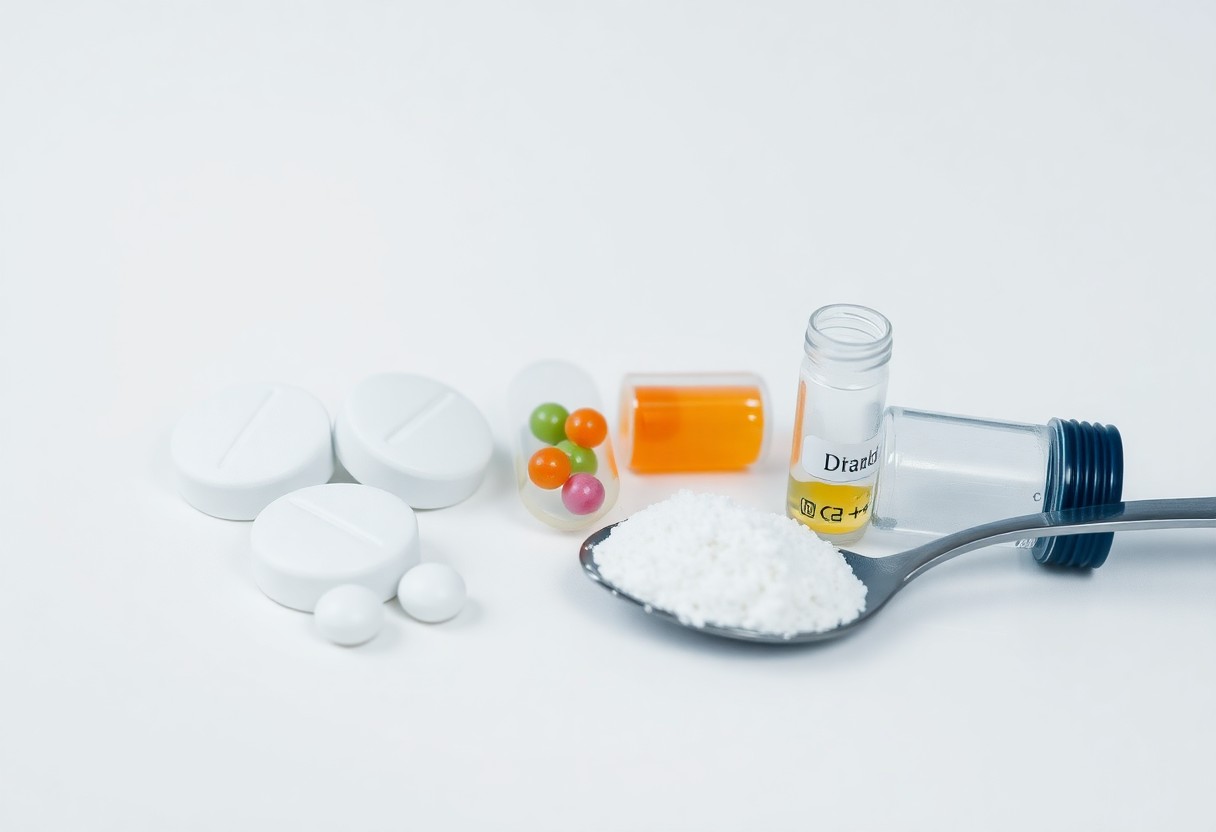
Over the counter choices affect how quickly and fully your body takes up active ingredients: powders and some liquid-filled capsules often deliver faster and higher absorption, while tablets can be slower but more stable. You should weigh benefits like improved bioavailability against dangers such as stomach irritation, interactions, or accidental overdose, and consult product specifics and dosing to optimize what suits your needs.
Overview of Supplement Forms
A quick comparison of tablets, capsules and powders shows how form influences how you absorb nutrients and manage dosing; tablets are compact and shelf-stable, capsules can mask taste and enable faster release, and powders dissolve rapidly for flexible dosing. Your absorption depends on formulation, excipients and gut health, so if you have allergies or take medications interactions and malabsorption can be dangerous. Prioritize product quality and bioavailability for your needs.
Tablets: Composition and Benefits
By compressing active ingredients with binders and fillers, tablets give you a durable, portable dose that often costs less and resists humidity; coatings or enteric layers control release. Tablets can be less immediate than powders or some capsules, and certain excipients may slow uptake or trigger sensitivities, so choose options with minimal unnecessary additives. Tablets are generally stable and convenient, but check labels to avoid fillers that could affect your absorption or cause reactions.
Capsules: Advantages and Disadvantages
Before choosing capsules, consider that they often dissolve faster than tablets and mask unpleasant flavors, making them easier for you to swallow; vegetarian or gelatin shells behave differently in your gut. Downsides include variable disintegration rates and potential for poor manufacturing quality; low-grade capsules can leak or contain impurities that are dangerous. Capsules can be positive for sensitive stomachs when sourced from reputable brands.
Due to shell type and fill, hard capsules disintegrate rapidly while soft-gels can carry oils that enhance uptake of fat-soluble nutrients, which may make them more bioavailable for vitamins like D or omega-3s. However, oil-based fills and moisture can accelerate degradation, and substandard production increases contamination risk that is dangerous for you, so prefer third-party tested products.
Powders: Solubility and Absorption
Against the limits of solid forms, powders dissolve and are absorbed faster when mixed properly, offering flexible dosing and often improved bioavailability; you can adjust your dose easily to match your needs. Poor mixing, abrasive particle size, or strong flavors can affect tolerability, and some unbuffered powders may irritate your stomach. Faster absorption is a major benefit, while improper handling or contamination presents a health risk.
A finely milled or micronized powder increases surface area to boost uptake, and pairing powders with acids, fats or enzymes can further aid absorption, but you must measure doses carefully and follow storage guidance. Powders are more exposed to oxygen and moisture-improper storage raises the chance of spoilage or microbial growth-so look for sealed, tested products to secure the positive effects and avoid danger.
Absorption Rates of Different Forms
While you often choose supplements by convenience, powders generally dissolve fastest and offer higher bioavailability, capsules dissolve moderately fast, and tablets often absorb more slowly due to binders; your stomach acidity, formulation, and food interactions cause variable uptake, and high-strength powders can pose a risk of rapid effects.
Factors Affecting Absorption
To optimize absorption you should consider formulation, digestion, and interactions:
- stomach pH affects dissolution
- food can slow or enhance uptake
- formulation (coatings, binders) alters release
Assume that your personal physiology and dosing schedule will change which form works best for you.
Studies Comparing Absorption Rates
Any comparative trials show small but meaningful differences: Study Findings
| Powders | faster absorption, higher Cmax |
| Capsules | moderate absorption, fewer GI issues |
| Tablets | slower, variable due to binders |
Absorption studies report metrics like Cmax and Tmax: Study Metrics
| Cmax | peak concentration – higher with powders |
| AUC | overall exposure – often similar across forms |
You should note that for some agents faster onset is beneficial, but rapid absorption can increase risk of side effects.
Convenience and User Preference
For daily routines, you usually pick the form that fits your life: tablets are portable and simple to store, capsules can mask unpleasant taste, and powders let you mix into drinks for flexible dosing. If you have swallowing issues, choose carefully because tablets carry a choking risk, and your preference directly affects adherence and practicality.
Ease of Use
Beside portability, tablets often need only water and are easy to carry, capsules are generally easier to swallow, and powders require mixing and accurate measuring, which can cause measurement errors. If you want consistent use, select the form that fits your daily habits and manual dexterity.
Taste and Palatability
Across forms, taste strongly influences whether you take something consistently: powders and chewables can offer pleasant flavors, tablets may be bitter, and capsules usually hide taste, so pick what helps you stick to the regimen.
Considering additives, flavorings and sweeteners in powders and chewables improve palatability but may add sugar or allergens; coatings on tablets can mask bitterness without altering absorption. Watch for allergic reactions or added sugars that could be harmful if you have health conditions, and choose options that balance taste with safety and adherence.
Nutrient Bioavailability
Your nutrient absorption depends on form, dissolution speed, and your gut environment; powders and many capsules often offer faster bioavailability because they dissolve quickly and present more surface area, while dense tablets and heavy binders can slow release. Enteric-coated products protect sensitive ingredients but may delay uptake, so match the form to the nutrient and your digestive sensitivity.
Role of Additives and Fillers
About additives and fillers: you should note that binders, coatings, and excipients can reduce absorption by slowing disintegration, while solubilizers and pH modifiers can improve uptake. Some fillers trigger sensitivities or interact with medications, so check labels if you have allergies or prescription interactions. Favor simpler formulations when you want predictable performance.
Digestive Process of Each Form
The digestive journey differs: powders mix with gastric fluids and begin absorption quickly; standard capsules release contents rapidly unless enteric-coated; tablets require mechanical and chemical breakdown, often delaying peak levels. Your stomach pH and gastric emptying influence timing; liquids and powders typically give faster onset, tablets often provide slower, steadier delivery.
Another point is that extended-release tablets can prevent spikes but may interact dangerously if crushed or combined with immediate-release doses, and some powders can irritate the GI tract if taken without enough fluid; you reduce risk by following dosing instructions, spacing supplements from medications, and choosing forms suited to your needs.
Cost-Effectiveness
Not all forms give the same bang for your buck: tablets are often cheapest per pill but contain fillers and may have slower absorption; capsules balance cost and absorption; powders can be most concentrated and cheaper per active dose but demand precise measuring and carry a risk of overdose or contamination. You should weigh price against dose, waste, and absorption to find the best long-term value for your needs.
Price Comparison
Comparison of average retail costs shows tablets usually lowest per unit, capsules mid-range, and powders cheapest per active gram; bulk buys and your brand choice change the final price you pay.
Price per Dose
| Form | Typical Cost per Dose |
|---|---|
| Tablet | Low |
| Capsule | Medium |
| Powder | Low-Lowest per active gram |
Value for Money
After cost per dose, you should evaluate absorption, dosing accuracy, and convenience; powders may deliver more active ingredient per dollar, while capsules often provide consistent dosing and less waste.
Money saved on powders can be lost to spoilage, inaccurate measuring, or poor quality; you should check third-party testing and factor in your ability to measure doses to avoid dangerous overdosing and ensure you actually get value.
Recommendations for Consumers
Unlike simple assumptions that one form always absorbs best, you should weigh factors like dose, digestion, and interactions; liquid and powder forms often absorb faster, while capsules and tablets may offer more consistent dosing and lower irritation risk; consult a clinician if you have health conditions or take multiple drugs because interactions can be dangerous.
Choosing the Right Form for Your Needs
Consumers should match the form to what you need: choose liquids or powders for faster onset, tablets or capsules for precise dosing and stability; if you have allergies, swallowing problems, or chronic illness, check inactive ingredients and ask your provider to avoid harmful interactions.
Situational Considerations
Situational factors like fasting, food, age, and GI conditions influence absorption; if you take medications on an empty stomach, you may get stronger effects but higher side-effect risk, so adjust form or timing to fit your routine and medical profile.
In addition, pregnancy, liver or kidney disease, and interactions with other drugs can change absorption and safety; if you are pregnant, nursing, elderly, or have organ impairment, some forms may carry higher risk while others offer safer, gentler delivery; consult your clinician before switching or adjusting doses and report side effects.
Summing up
Following this, you should know absorption depends on form and formulation: powders typically absorb fastest because they dissolve before ingestion; capsules can provide rapid or delayed release depending on gel or enteric coating; tablets often absorb more slowly due to binders and coatings. Your age, digestive health and specific formulation greatly affect bioavailability, so check product details and discuss your needs with a healthcare professional.
Leave a Reply