

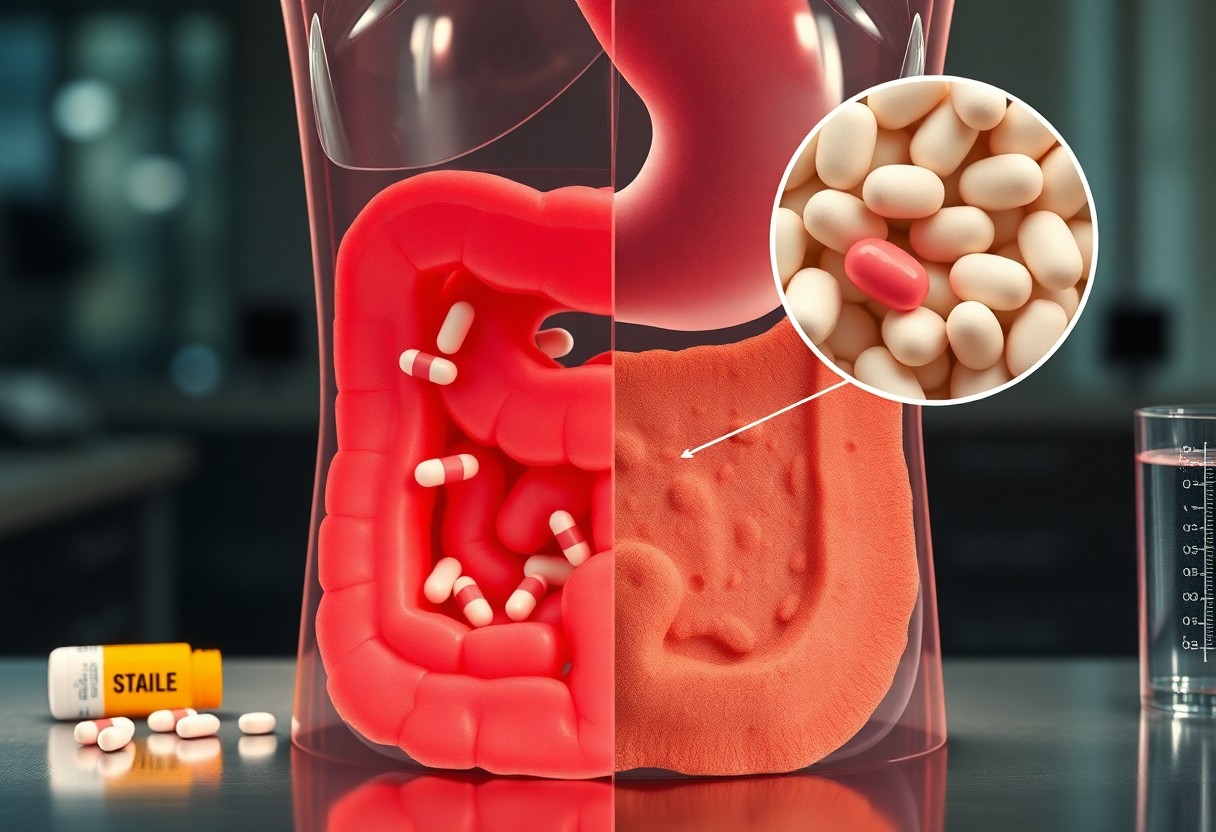
Most of what determines whether supplements work for you is your digestive system: if your stomach acid, enzymes and gut lining are compromised, you may absorb far less of important nutrients, increasing risk of deficiency and drug interactions; conversely, optimizing gut acidity, enzyme activity and microbiome can dramatically boost absorption so supplements deliver intended benefits. You should pay attention to bowel transit, food pairing and underlying conditions to protect your health and maximize supplement efficacy.
Understanding Digestive Health
A well-functioning digestive system determines how effectively you absorb supplements; when your stomach acid, digestive enzymes, and intestinal lining are balanced you gain better absorption, while disruptions like low acid or chronic inflammation can cause reduced uptake and risk of nutrient deficiencies.
The Role of Gut Microbiota
Across your gut, trillions of microbes shape supplement fate: beneficial bacteria produce enzymes and metabolites that increase bioavailability, whereas dysbiosis can metabolize or inactivate nutrients and promote permeability that lowers your supplement effectiveness.
Impact of Digestive Disorders
The presence of conditions such as celiac disease, inflammatory bowel disease, chronic pancreatitis, or small intestinal bacterial overgrowth often causes malabsorption, leading to serious nutrient deficiencies and making standard oral supplements unreliable without tailored approaches.
Understanding your specific diagnosis, getting targeted tests, and switching to alternative formulations-sublingual, liposomal, or injectable-can restore your levels; prioritize accurate testing, appropriate delivery methods, and medical guidance to reduce gut inflammation and improve absorption.
Mechanisms of Supplement Absorption
Now you absorb supplements through dissolution in the stomach, enzymatic breakdown and passive or active transport across the intestinal epithelium; your gut microbiome, mucosal integrity and intestinal transit time determine how much active nutrient enters your circulation.
Nutrient Breakdown and Bioavailability
Any supplement must be released, solubilized and chemically modified so your body can use it; fat-soluble vitamins need bile and micelle formation while water-soluble nutrients rely on carrier-mediated transport, so your enzymes and bile production shape effective bioavailability.
Factors Influencing Absorption Rates
At intake several variables change your uptake:
- Gut microbiome
- Stomach pH
- Enzyme activity
- Intestinal transit time
- Food matrix & formulation
Knowing how these factors interact lets you adjust timing, dosage and form to improve your supplement absorption.
For instance you may have low gastric acid that reduces absorption and elevates risk of pathogenic overgrowth, while a fat-containing meal markedly increases uptake of fat-soluble nutrients; using chelated or liposomal formulations can be a positive strategy to boost bioavailability.
- Mucosal integrity
- Supplement form
- Meal composition
- Drug interactions
Knowing which of these apply to you directs safer, more effective supplement choices.
The Connection Between Digestive Health and Supplement Efficacy
If your gut lining, enzyme activity and microbiome are impaired, you’ll experience reduced absorption of vitamins and minerals; inflammation and rapid or slow transit further alter uptake, while a healthy microbiome supports conversion and bioavailability.
Effects of pH Levels
Across the digestive tract, pH controls dissolution and enzymatic release: low stomach acid aids iron and B12 release, whereas higher pH can cause reduced iron and B12 absorption; maintaining optimal pH helps you absorb many supplements.
Timing and Food Interactions
Behind meal timing and combinations lie predictable effects: fat-soluble vitamins need dietary fat for uptake, while calcium and phytates can inhibit iron; you can boost or block absorption depending on what and when you eat.
Consequently you should separate iron and calcium by two hours, take fat-soluble vitamins with a meal containing fats, avoid pairing iron with dairy or high-phytate foods, and consult about drug-supplement interactions so you maximize benefits and minimize absorption-blocking risks.
Strategies to Optimize Absorption
Unlike many one-size-fits approaches, you can boost supplement uptake by adjusting meal timing, addressing gut issues, and selecting compatible forms; prioritize managing low stomach acid and gut dysbiosis to prevent poor absorption, pair fat-soluble nutrients with meals containing fat, separate minerals that interact (eg, iron and calcium), stay hydrated, and consider targeted enzymes or proton support when malabsorption risks are present.
Dietary Considerations
With attention to what you eat, you improve uptake: take fat-soluble vitamins with dietary fat, avoid taking high-fiber meals immediately with mineral supplements because fiber can bind minerals, limit alcohol that impairs absorption, and reduce phytate-rich foods around dosing; small, frequent meals and balanced macronutrients help stabilize digestion and support consistent bioavailability.
Choosing Quality Supplements
Supplements should be third-party tested and list active forms and dosages; choose bioavailable variants (eg, methylcobalamin, chelated minerals), avoid unnecessary fillers, and be alert for heavy metal contamination or undisclosed additives that pose health risks.
A practical review includes checking for USP/NSF or equivalent certification, GMP manufacturing, clear ingredient sourcing, appropriate clinical dosages, and expiration dates; you should prioritize formulations with demonstrated bioavailability and transparent testing to minimize exposure to adulterants and ensure efficacy.
Testing and Measuring Digestive Health
Keep monitoring your digestive health with objective measures so you can link symptoms to absorption issues; stool, breath, blood tests and imaging reveal key markers, flag malabsorption or inflammation as danger signs, and confirm improved absorption after interventions.
Diagnostic Tools and Techniques
Before selecting interventions you should use breath tests for SIBO, stool analysis for microbiome and digestion, blood nutrient panels for deficiencies, and endoscopy/imaging when structural disease is suspected; prioritize breath and blood tests, watch for pathogens or severe deficiencies as danger alerts, and use positive trends to guide dosing.
Interpreting Results
Between lab data and symptoms you interpret results by comparing nutrient levels, inflammatory markers, transit time, and microbial patterns; a low nutrient level often signals poor absorption, while elevated CRP or fecal calprotectin indicates active inflammation (a danger), and rising nutrient levels indicate treatment success.
Testing should be integrated with your history and repeat measures when needed, working with your clinician to treat infections, correct dysbiosis, or adjust supplement form and dose; urgent flags like severe deficiencies or ongoing blood loss are danger signs, whereas normalized labs and symptom relief are a clear positive outcome.
The Future of Digestive Health and Nutrition
Many innovations will let you combine gut diagnostics, microbiome profiling and targeted therapies so you can maximize supplement absorption, avoid malabsorption and reduce harmful interactions, ultimately achieving better nutrient status and sustained wellness.
Advancements in Research
One major area is high-resolution microbiome and metabolomic testing that helps you pinpoint microbes or metabolites that impede absorption, flagging dangerous dysbiosis and guiding safer, more effective supplement choices for your unique gut.
Personalized Supplements
With genetic, microbiome and metabolic data, you can receive supplements tailored in form, dose and timing to your digestion, improving uptake and minimizing side effects through tailored doses and bioavailability optimization.
Future integration of wearables, continuous gut markers and AI will let you time doses when your gut is most receptive so you can boost absorption while avoiding risks like interactions or over-supplementation, giving you precise control over your nutrient status.
Final Words
Taking this into account, you should prioritize your digestive health because it directly affects how well you absorb supplements: stomach acid, enzyme activity, gut microbiome, transit time and intestinal integrity determine nutrient breakdown and uptake. Addressing dysbiosis, managing medications, tailoring timing with meals, and choosing bioavailable supplement forms will help you maximize efficacy and reduce wasted doses.
Leave a Reply