

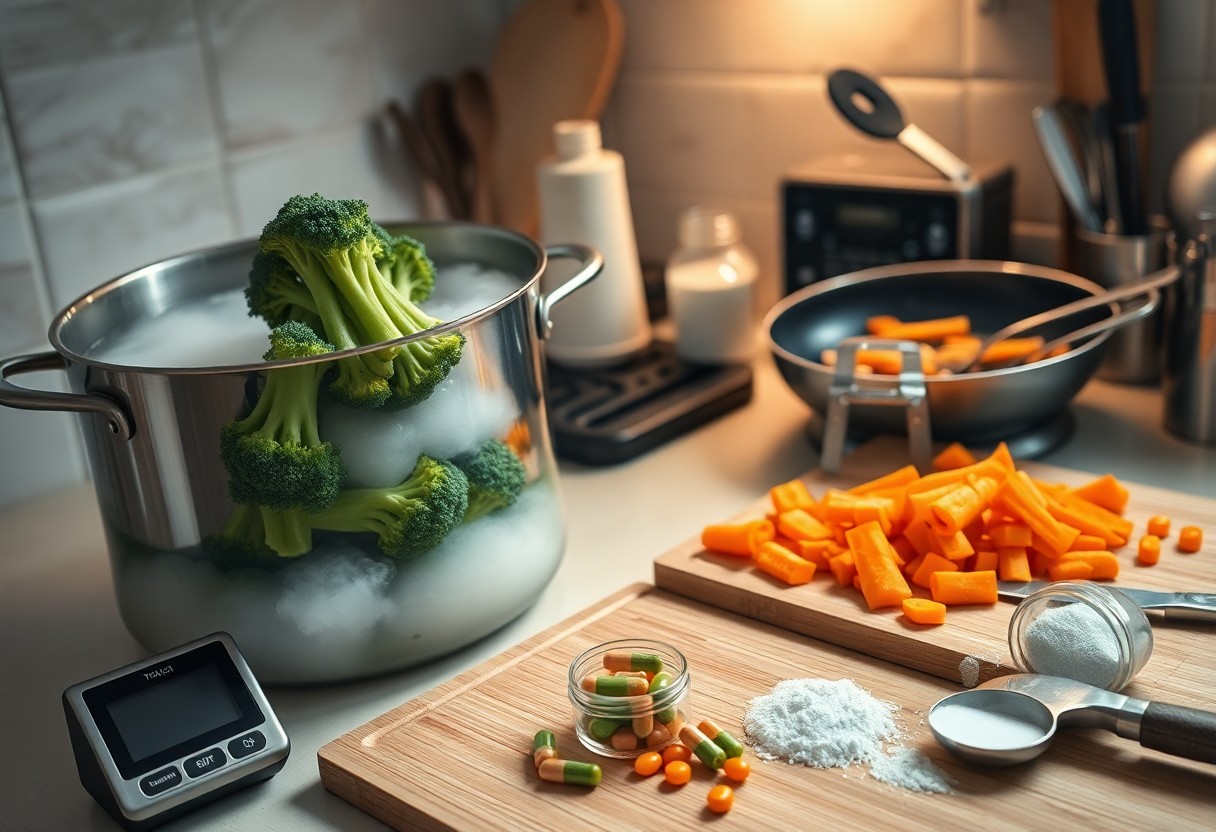
There’s a lot to consider: your cooking methods can cause significant nutrient loss-for example, when you boil vegetables many water‑soluble vitamins leach into the cooking water, and prolonged high heat degrades antioxidants, increasing deficiency risk; you can limit losses by steaming, shorter cooking times, and preserving cooking liquids, and you should consider sensible supplementation when dietary intake or absorption is insufficient to meet your needs.
Cooking Methods and Nutrient Loss
Before you choose a technique, know that heat, water and air affect nutrients differently: water-soluble vitamins like vitamin C and B-complex are easily lost to cooking liquids, while fat-soluble vitamins and many minerals are more heat-stable but can degrade with prolonged high temperatures; you can limit losses by shortening cook time, reducing water, and preferring gentler methods, which can sometimes increase antioxidant bioavailability as a positive trade-off.
Boiling and Steaming
With boiling you risk leaching large amounts of vitamin C and B vitamins into the water, especially when foods are overcooked or diced finely; steaming, however, preserves those nutrients because food isn’t submerged, so you should use minimal water, keep cooking times short, reuse cooking liquids for soups or sauces, and opt for whole or larger pieces to retain more of your food’s nutrient value.
Frying and Roasting
Among high-heat methods, frying and roasting intensify flavor and can increase availability of some antioxidants, but they also expose nutrients to intense heat and oxygen; frying with unstable oils or reusing oil promotes oxidized fats and harmful compounds (e.g., acrylamide in starchy foods), so temperature control and oil choice are vital to protect your health while preserving minerals and flavor.
Indeed, you can reduce harm by using stable, high-smoke-point oils sparingly, avoiding repeated oil reuse, and roasting at moderate temperatures to limit nutrient destruction; be aware that thin cuts or breading boost surface browning and formation of hazardous compounds, so choose thicker pieces, shorter exposure, and finish with fresh herbs or citrus to add nutrients and antioxidants.
Impact of Food Preparation on Nutritional Value
Even routine steps like peeling, boiling or prolonged heating can cause vitamin and phytochemical loss, while excess water and air increase oxidation of sensitive nutrients; you can limit damage by using minimal water, shorter cook times, steaming, and cooking with skins when possible to preserve antioxidants and maximize nutrient retention.
Chopping and Grating
An increased surface area from chopping or grating accelerates oxidation and vitamin C degradation, but it can also improve your absorption of carotenoids; you should chop close to when you cook, use sharp tools to reduce cell damage, and avoid excessive shredding to keep nutrient loss and waste low.
Marinating and Seasoning
Any acidic or oil-based marinade can help your food retain moisture and enhance antioxidant uptake, and certain marinades can reduce harmful compounds during high-heat cooking, but improper marinating at room temperature raises bacterial risk, so you must use safe times and temperatures.
At room temperature marinating is unsafe for long periods, so you should refrigerate marinades and discard used marinade unless boiled; using olive oil, herbs and acid not only improves flavor but can reduce formation of harmful HCAs when grilling, while shorter marination times limit protein breakdown and spoilage.
Storage and Its Effect on Nutrients
One significant factor in nutrient retention is how you store food: exposure to light, air and heat drives vitamin breakdown and oxidation. By choosing airtight containers, cool dark spots and timely use, you reduce nutrient loss and the risk of spoilage, while preserving the health benefits of your produce and proteins.
Freshness vs. Shelf Life
One common trade-off you face is between peak freshness and long shelf life: freshly harvested produce usually delivers more immediate vitamins, while processed or dried options extend usability but often have reduced vitamin content. Choose what matches your routine, and balance convenience against nutrient degradation to keep your meals nourishing.
Refrigeration and Freezing
Above all, refrigeration slows enzymatic activity and microbial growth so you maintain more nutrients for longer, and freezing largely locks vitamins in place; however, improper thawing or repeated freeze-thaw cycles increase the danger of bacterial growth and nutrient breakdown, so manage temperatures and timing carefully.
Considering storage technique, you should blanch vegetables before freezing to halt enzymes, use vacuum-sealed or airtight packaging to limit oxidation, label dates and avoid long fridge storage; keeping your fridge at or below 4°C and your freezer at −18°C prevents temperature abuse, while methods like flash-freezing and minimal air exposure maximize nutrient preservation.
Identifying Nutrient Deficiencies
Despite common assumptions, your cooking choices can deplete vitamins and minerals, increasing the risk of hidden deficiencies; you should assess dietary patterns, absorption issues, and symptoms because micronutrient losses from overcooking, high heat, and excessive peeling may produce serious health consequences if left unchecked.
Signs of Nutrient Deficiency
Before attributing tiredness or poor recovery to lifestyle alone, consider that you may have deficiency signals such as persistent fatigue, pale skin, easy bruising, numbness, or frequent infections; you may also notice hair loss, brittle nails, slow wound healing, or mood shifts-if these persist, seek evaluation.
Testing and Diagnosis
With targeted testing you can confirm deficits: standard panels (CBC, ferritin, serum B12, 25‑OH vitamin D, folate) plus zinc, magnesium, or thyroid screens as indicated; functional markers (methylmalonic acid, homocysteine) help clarify borderline results so you and your clinician can plan appropriate interventions and avoid unnecessary supplements.
The interpretation of labs depends on your symptoms, medications, life stage, and GI health; work with a provider to select confirmatory tests, consider timing and fasting effects, and schedule follow‑ups-over‑supplementation (iron, vitamin A) can be dangerous, while targeted, monitored supplementation typically corrects deficiencies safely.
When Supplements are Necessary
For people who lose nutrients through high-heat cooking, restrict food groups, have absorption issues, are pregnant, elderly, or have medical conditions, supplements can fill gaps and protect health. You should prioritize lab testing and professional advice; untreated deficiencies are dangerous, while targeted supplementation can offer clear benefits for your energy, immunity, and bone health.
Whole Foods vs. Supplements
Supplements can help, but you should rely on whole foods first because they provide nutrient synergy and fiber that pills lack. Use supplements to address persistent shortfalls; choose evidence-backed forms and doses so that you avoid overdosing and gain the benefits of corrected deficiencies in your diet.
Choosing the Right Supplements
Whole assessments-blood tests, diet reviews, and medication checks-guide what you take; consult a qualified professional before starting supplements. Prefer third-party tested brands, follow recommended doses, and watch for interactions; some nutrients can be toxic in excess, while the right choice yields measurable improvements in your health.
Right after testing, pick forms with proven absorption (for example, methylated B-vitamins if you metabolize folate poorly), avoid high-dose fat-soluble vitamins unless monitored, and use products certified by NSF or USP; iron and vitamin A pose particular toxicity risks, and verified supplements reduce the chance of contamination while improving your nutrient status.
Best Practices for Nutrient Retention
Many simple choices help you preserve vitamins and minerals: use minimal water, cook briefly, keep lids on to trap steam, and cut produce into larger pieces to reduce surface exposure. Use steaming or microwaving where possible, and avoid overcooking which can destroy heat-sensitive vitamins. Store foods cold and use leftovers quickly to protect your nutrient intake.
Cooking Techniques to Preserve Nutrients
Around steaming, microwaving, and quick sautéing you can retain most nutrients; prefer these methods over prolonged boiling that leaches water-soluble vitamins. Keep cooking times short, use lids, add minimal water, and add salt or acids near the end to protect flavor and vitamin stability, so you maximize nutrient density in every meal.
Incorporating Raw Foods
For vitamin C and folate preservation, you should include raw fruits and crunchy vegetables in salads and snacks, and pair them with healthy fats to boost absorption of fat-soluble nutrients. Wash produce thoroughly to reduce pathogen risk and prefer firm, fresh items; raw choices provide a positive nutrient boost but must be balanced with cooked foods for full bioavailability.
The benefits of raw foods include higher levels of certain vitamins and enzymes, but you must weigh risks: avoid raw sprouts if you’re immunocompromised, thoroughly wash and refrigerate produce, and consider fermented alternatives for safety and probiotics. Combining raw leafy greens with a little oil increases carotenoid absorption, offering a valuable nutrient advantage when handled properly.
Summing up
To wrap up, your cooking choices – high heat, long cooking, peeling, and excessive water use – can lower vitamins and minerals, so you should favor gentler methods, minimal water, and whole foods to preserve nutrients. If you have limited diet variety, increased needs, or persistent deficiencies confirmed by testing, targeted supplements can safely fill gaps under professional guidance.
Leave a Reply