

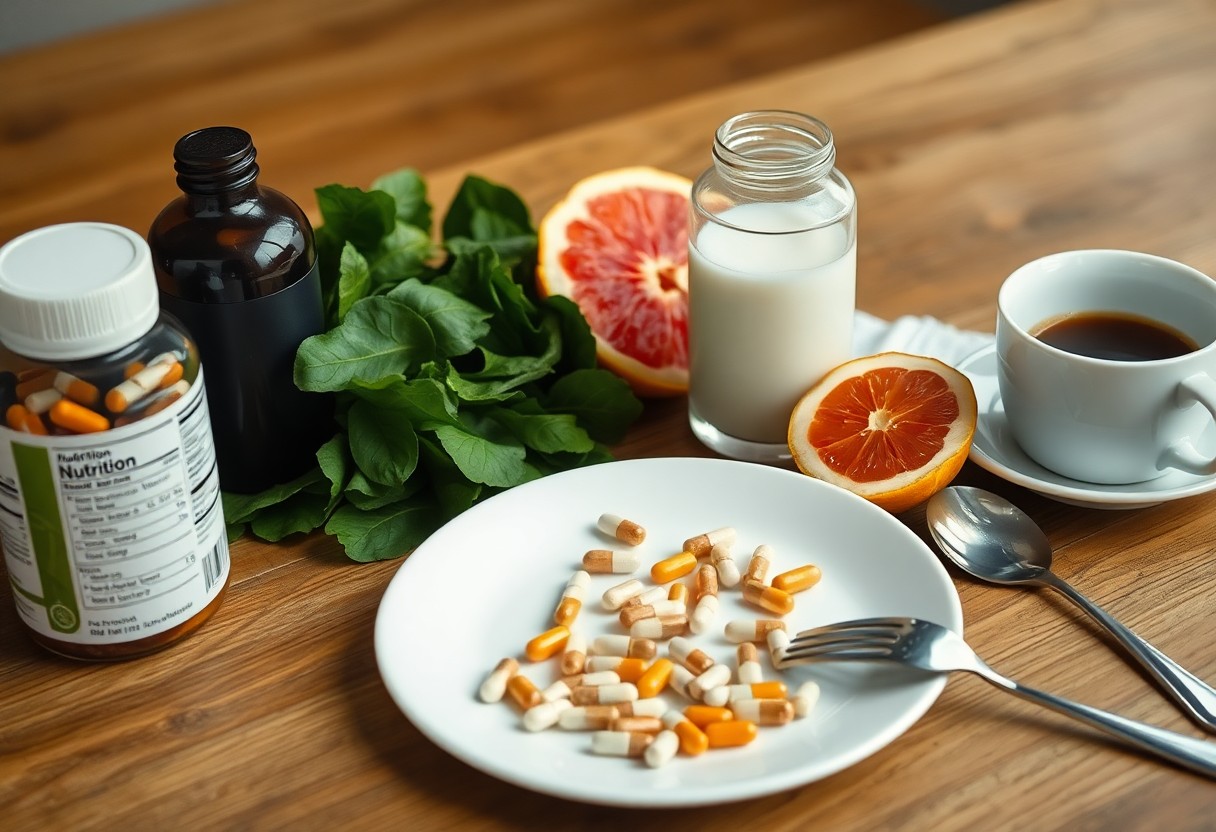
Food can significantly change how supplements and medications behave in your body, so you must understand how your meals affect outcomes; some foods cause reduced absorption of nutrients, others raise blood levels causing increased toxicity, and some combinations produce enhanced benefits-you should time doses and adjust meals to optimize safety and efficacy.
Understanding Food Interactions
Before you pair health products with meals, know that food can change absorption, metabolism and overall effect size; you should adjust timing and dose when drug toxicity or bleeding risk may occur, and use meals strategically to enhance benefit.
Types of Food Interactions
Among common interaction categories you encounter:
- Absorption – uptake altered by food
- Metabolism – enzymes induced or inhibited
- Binding – chelation reduces availability
- Microbiome – gut flora changes metabolism
| Absorption | Reduced or increased uptake |
| Metabolism | Enzyme inhibition/induction |
| Binding | Chelation lowers absorption |
| pH | Solubility and release changes |
| Microbiome | Biotransformation of compounds |
After you identify the type, adjust timing or choose alternatives to reduce danger and enhance positive outcomes.
Mechanisms of Interaction
Between food and your product the main mechanisms are enzyme modulation (CYPs), transporter competition, pH-driven solubility shifts, and chelation, so you must plan dosing to avoid altered levels and harm.
Due to enzyme changes and microbial actions, you may face increased toxicity (e.g., grapefruit-related accumulation) or improved absorption (fat-enhanced uptake of fat‑soluble nutrients); you should adjust when risks or benefits are significant.
Impact on Nutrient Absorption
The foods and supplements you take can dramatically alter how your body absorbs nutrients, meaning your supplements may be less effective or lead to imbalances; reduced absorption from fiber, phytates, or competing minerals can cause deficiencies, while combinations that boost uptake (like vitamin C with iron) offer a positive increase, and certain interactions risk a dangerous excess when absorption is amplified.
Vitamin and Mineral Absorption
Above all, you should know that some nutrients help each other while others compete: vitamin C markedly increases non-heme iron uptake, fats are needed for fat-soluble vitamin absorption, and compounds like phytates or calcium can block mineral uptake; tailoring meal composition around your supplements improves what your body actually uses.
Role of Digestive Enzymes
Nutrient breakdown depends on enzymes you produce and those in foods or supplements; if enzyme activity is low, large molecules pass unabsorbed, reducing benefit, while enzyme-rich meals or supplemental enzymes can enhance absorption; be aware that some medications and food inhibitors can impair digestion, lowering the effectiveness of your health products.
But if your stomach acid or pancreatic enzymes are suppressed-by aging, disease, or antacids-you can experience malabsorption of protein, fat, and vitamin B12, which may cause serious deficiencies; using digestive enzyme supplements or adjusting food timing can provide a beneficial rescue, though you should monitor for interactions that might create a dangerous imbalance.
Effects on Medication Efficacy
Some medications become less effective or more potent depending on what you eat; you may find that meals high in fat delay absorption or that grapefruit amplifies levels, increasing side-effect risk. To protect your therapy, check timing, avoid known dangerous combos, and consult your provider; grapefruit, green leafy vegetables, and high-fat meals are common influencers, while adjusting meal timing can have a positive effect on absorption.
Food and Pharmacokinetics
The way food alters pharmacokinetics-absorption, distribution, metabolism, excretion-changes how your drug acts: a fatty meal can increase oral absorption of lipophilic drugs, while certain foods induce or inhibit liver enzymes, modifying blood levels. Watch for enzyme inhibitors like grapefruit (dangerous) and enzyme inducers like cruciferous vegetables (reduce effect); simple timing adjustments often yield positive results.
Examples of Food-Medication Interactions
FoodMedication interactions include dairy reducing tetracycline absorption, vitamin K-rich greens lowering warfarin’s effect, tyramine-rich aged cheeses causing hypertensive crises with MAOIs, and grapefruit increasing statin levels; you should identify and avoid high-risk combos and inform providers of your diet.
Understanding how these examples work helps you manage risk: space doses and meals, get INR checks if you eat leafy greens on warfarin, avoid grapefruit while on susceptible medications, and treat supplements like drugs-St. John’s wort can markedly lower many therapies. Use regular monitoring, communicate dietary habits, and make simple timing or food swaps to convert dangerous interactions into safe, effective therapy.
Health Products: Supplements and Drugs
After you combine food with supplements or prescription drugs, absorption and metabolism can change dramatically; you should assess timing, meal composition, and interactions to keep treatment effective. For example, fat-soluble vitamins are better absorbed with meals, while grapefruit can dangerously raise levels of some drugs.
Common Health Products Affected
Against the idea that only exotic items interact, everyday products like blood thinners, statins, antibiotics, antidepressants and herbal remedies (notably St. John’s wort) are often affected; dairy, tea or calcium can block iron and antibiotic absorption, and grapefruit impairs many drug pathways.
Guidelines for Safe Usage
Safe strategies include reading labels, sticking to consistent meal timing, separating conflicting supplements (eg, iron away from calcium), avoiding known offenders like grapefruit with certain drugs, and consulting your clinician or pharmacist before changes.
The most effective step is to keep an updated list of all drugs and supplements and show it to your provider; use interaction checkers, report side effects promptly, monitor therapies that require testing (eg, INR for warfarin), and, when appropriate, take fat‑soluble vitamins with a meal to improve benefit.
Dietary Considerations
Your everyday food choices can alter how supplements and medications act: dietary fats often boost absorption of fat‑soluble vitamins, while grapefruit juice and some teas can raise drug levels or cause dangerous side effects; high‑fiber meals may reduce absorption of certain drugs, and alcohol can increase toxicity, so you should pair foods and health products with intent.
Food Choices and Health Products
Among the foods you eat, leafy greens, dairy, citrus, and high‑fiber items interact differently with health products: for example, vitamin K-rich greens can reduce anticoagulant effectiveness, dairy can bind antibiotics, and healthy fats can enhance vitamin uptake, so align choices to the specific supplement or medication you take.
Timing of Consumption
Between meals or with food matters because stomach contents change absorption and side‑effect risk: taking some medicines on an empty stomach may increase absorption and side effects, while others need food to prevent irritation or to improve uptake; spacing interacting items by a few hours often reduces harm.
Considerations when scheduling: you should separate iron from calcium or antacids by about two hours because they can severely reduce effectiveness of one another; take thyroid meds on an empty stomach to ensure proper absorption; and avoid alcohol with sedatives or liver‑metabolized drugs because it can sharply increase toxicity.
Future Research Directions
Keep exploring how food modifies absorption, metabolism and efficacy of supplements and drugs so you can make safer choices; focus on high-risk interactions, personalized nutrition, microbiome effects, and long-term outcomes.
Emerging Areas of Study
Areas such as nutrient-drug pharmacokinetics, gut microbiome modulation, genetic polymorphisms, and food matrix effects are expanding; you should watch for research on severe interaction mechanisms and beneficial synergies that change dosing and timing.
Potential Implications for Health Guidelines
To update guidelines, regulators and clinicians must integrate food-product interaction data so you receive precise advice on timing, contraindications, and populations at elevated risk, improving safety and outcomes.
It will require revised labeling, clinician training, consumer education, and targeted warnings for those with comorbidities; you may benefit from clear contraindication alerts and evidence-based recommendations that reduce harmful events while maximizing positive treatment effects.
Summing up
Following this, be aware that the foods you eat can change how supplements and medications are absorbed, metabolized, and cleared, altering benefits and risks. You should time doses, maintain consistent meal patterns, separate competing nutrients, and avoid known interactions (e.g., grapefruit, high‑fat meals) or consult a provider to optimize your regimen.
Leave a Reply